The Texas Coping Maintenance Protocol: How to Protect Your Stone Investment
In the Dallas-Fort Worth area, the backyard aesthetic is defined by the juxtaposition of cool, blue water against the earthy textures of Oklahoma flagstone or creamy Leuders limestone. For many homeowners, the addition of a saltwater chlorine generator is the final step in creating a low-maintenance oasis. However, there is a technical tension at play: the very salt that makes the water feel soft is a silent catalyst for the degradation of porous Texas stone.
At Simplified Pools, we see the results of this conflict every season. Homeowners often find themselves choosing between the luxury of natural materials and the longevity of their pool’s structure. We believe you can have both, but it requires moving beyond basic cleaning and adopting a professional-grade maintenance protocol. Understanding how to seal pool coping isn't just about aesthetics; it is about preserving the structural integrity of your stone against the unique chemical and climatic pressures of North Texas.
Section 1: The Science of Subflorescence: Why Salt Attacks Texas Stone
To protect your stone, you must first understand its primary enemy: subflorescence. This isn't mere surface erosion; it is a microscopic mechanical failure. When salt water splashes onto porous materials like limestone or flagstone, the stone can absorb up to 5% of its weight in that mineral-heavy liquid. As the Texas sun evaporates the water, the salt stays behind, migrating into the stone’s internal pores.
Once inside, the salt begins to crystallize. These growing crystals are deceptively powerful, capable of exerting upward of 100,000 PSI of internal pressure. This exceeds the tensile strength of almost any natural sedimentary stone. In DFW, this process is accelerated by our freeze-thaw cycles. Moisture trapped behind a salt-weakened surface expands as it freezes, leading to "spalling"—where the stone delaminates and flakes off in thin layers.
“Saltwater doesn't melt stone; it grows inside it, creating internal pressure that eventually forces the stone to delaminate from the inside out.”
Section 2: Choosing Your Armor: Penetrating vs. Topical Sealers
When selecting a sealer, the goal is to create a hydrophobic barrier without suffocating the stone. In our experience, topical "wet-look" sealers are often a poor choice for the North Texas climate. These coatings sit on top of the stone and can trap rising moisture from the soil or the pool. In 90-degree heat, this trapped vapor turns into "blushing"—unsightly white, cloudy patches where the sealer has delaminated from the stone.
Instead, pool techs reach for penetrating silane or siloxane sealers. These products dive up to 1/4 inch deep into the stone's pores, chemically bonding to the minerals to create a breathable shield. This allows water vapor to escape while preventing liquid salt water from entering.
For DFW homeowners, a high-quality penetrating sealer reliably handles the environment for three to five years before requiring re-application. If you aren't sure if your current seal is intact, check the pool chemicals section of your maintenance log or perform the bead test after a light rain.
Section 3: The Pre-Sealing Deep Clean: Preparation Standards
The most common reason for sealer failure isn't the product itself; it’s the preparation. Sealing over organic stains, calcium deposits, or—worst of all—moisture, is a recipe for a short-lived finish. Before any chemical application, the stone must be stripped of debris and allowed to reach a "bone dry" state.
We recommend a 48-hour drying window after cleaning. The stone’s moisture content should ideally be below 15% to ensure the sealer can penetrate deeply. When cleaning, avoid high-pressure washing. Soft stones like Leuders can be etched by high-pressure streams; keep your equipment below 1,500 PSI. Furthermore, ensure your water chemistry is balanced before you begin, as "hungry" water can damage the mortar joints you are trying to protect.

“Sealing over a dirty or damp stone is the fastest way to ensure your protective coating fails within six months.”
Section 4: The Application Protocol: Professional Execution
Timing is everything in Northlake. The ideal weather window for sealing is a clear day with ambient temperatures between 50°F and 90°F. If you apply sealer in the direct midday Texas sun, the product will "flash-dry" on the surface, preventing it from reaching the internal pores where it is needed most.
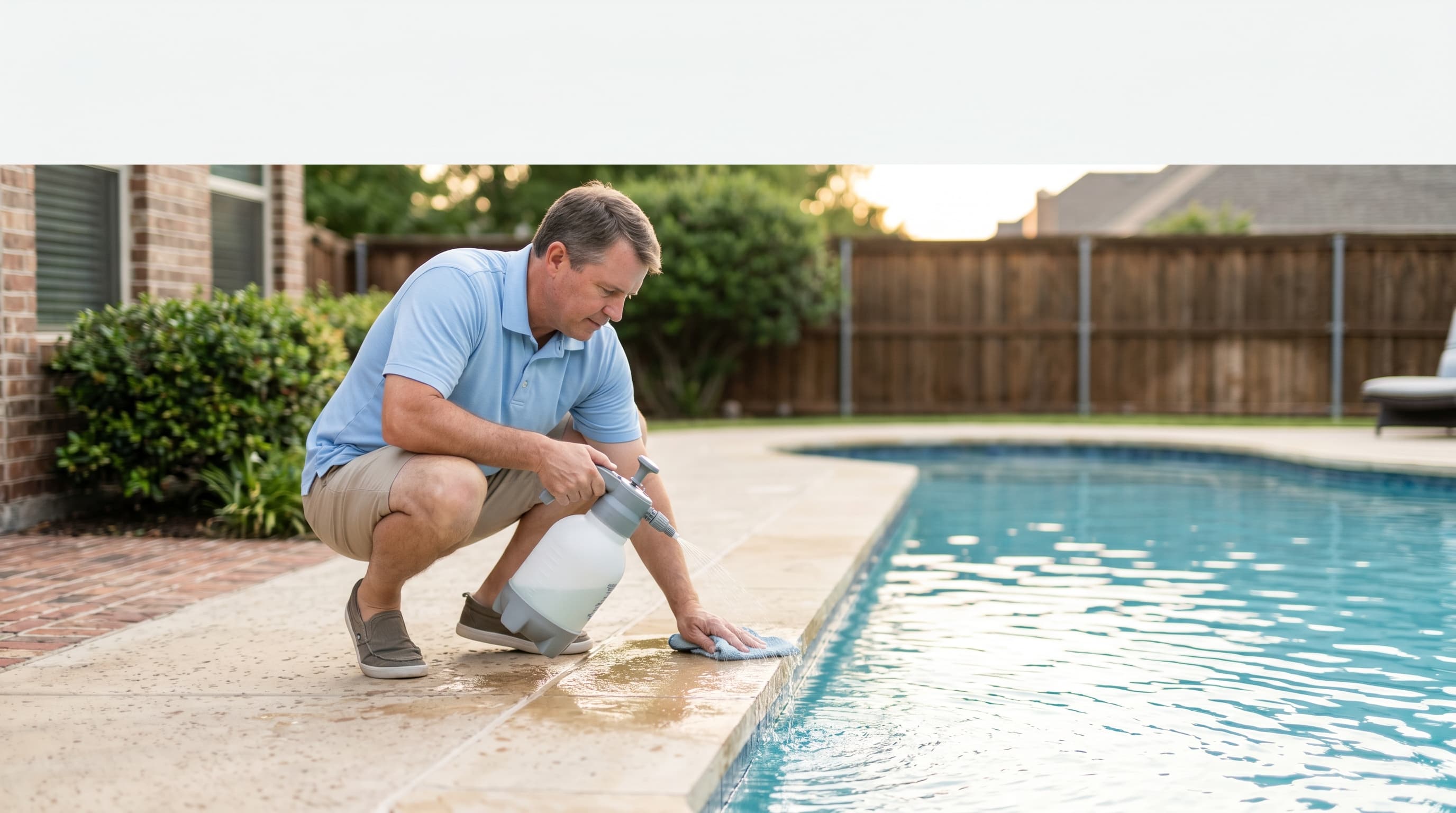
The "Wet-on-Wet" technique is the industry standard for maximum saturation. This involves applying a second coat while the first is still tacky, ensuring a deep chemical bond. Use a low-pressure pump sprayer for even coverage, and follow up with a microfiber applicator to back-roll any puddles. Be mindful of runoff; while these sealers are designed for stone, you want to minimize the amount of raw product entering your water filtration system.
If you are also performing minor repairs to equipment during this maintenance window, such as replacing a pressure gauge, ensure you use a reliable sealant like 1-2-x-520-ptfe-thread-seal-tape-white to prevent leaks that could keep the surrounding stone damp.
Section 5: The Rinsing Regimen: Post-Sealing Maintenance
A sealer is a shield, not a suit of armor. To extend the life of your stone, we advocate for the "Freshwater Flush." Rinsing your coping with a garden hose for just 60 seconds after heavy pool use can reduce surface salt concentration by as much as 80%. This simple habit prevents the "wet-dry" cycle from concentrating salt at the surface.
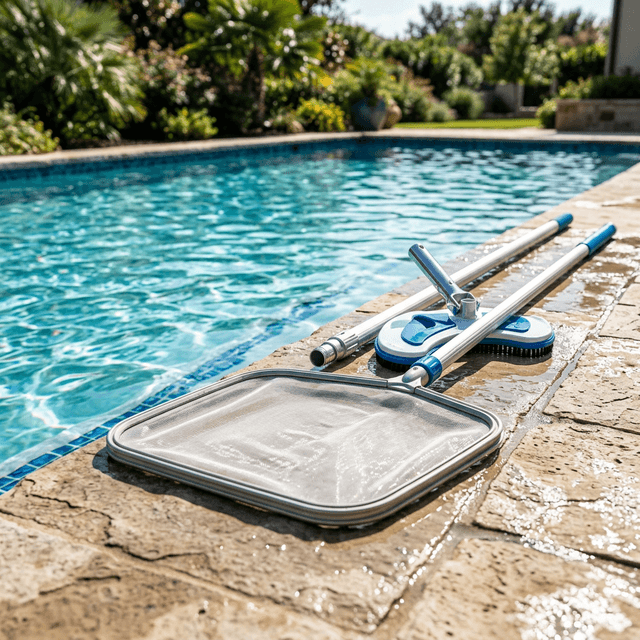
In addition to manual rinsing, managing the "splash zone" is critical. Robotic cleaners play a significant role here. By keeping the water line clear of debris and oils, they reduce the need for aggressive manual scrubbing which can wear down the stone's edges.

“The best sealer in the world is no match for a homeowner with a garden hose and a 60-second habit.”
Section 6: Water Chemistry: The Invisible Protector
The health of your stone is inextricably linked to the Langelier Saturation Index (LSI). If your pool water is chemically "undersaturated" (an LSI below -0.3), the water becomes aggressive. It will actively seek out calcium to balance itself, leaching it directly from your stone coping and mortar joints. This leads to a "honeycomb" appearance in the stone and crumbling grout.
Maintaining a proper calcium hardness level—typically between 250 and 400 ppm—is the best way to ensure your water doesn't "eat" your investment. Conversely, high pH (above 7.8) promotes scale formation, which can trap salt against the stone surface, creating a localized environment for decay.
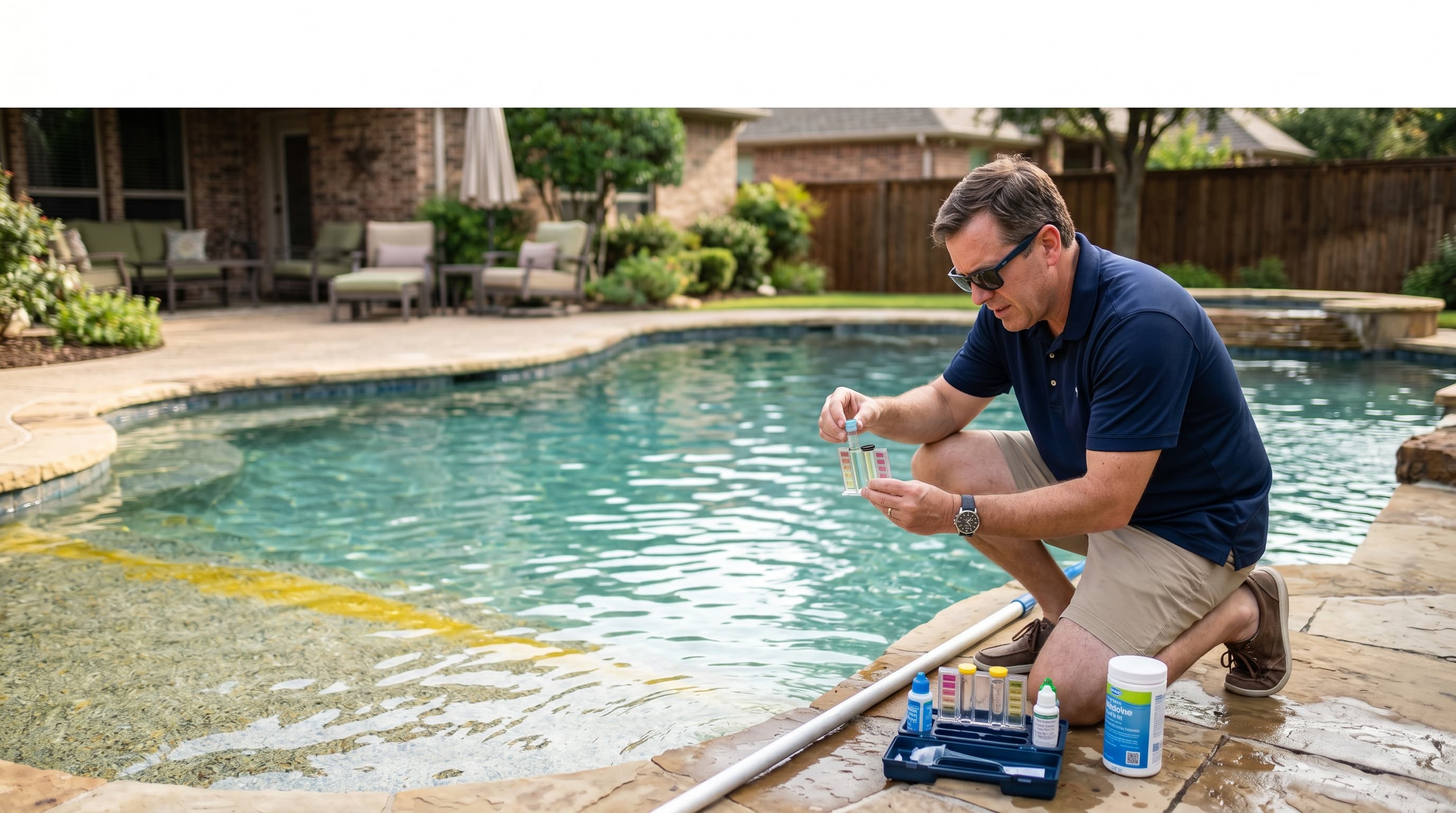
For those using 25-lb-3-xtreme-wrapped-tabs-pail as a supplemental sanitizer, remember that consistent water testing is the only way to ensure your LSI remains in the "safe zone" for stone longevity.
Protect Your Investment with a Professional Evaluation
Natural stone is a significant investment that defines the character of your home. Don't wait for your stone to start flaking or "sanding" before you take action. Whether you need a professional sealing application or a comprehensive water chemistry audit to protect your masonry, the team at Simplified Pools is ready to help Northlake homeowners preserve their backyard oasis.
Book a consultation today to ensure your stone lasts as long as your home.