Pool equipment is a confusing market. There's a lot of stuff out there that's genuinely great, some that's solid value, and a surprising amount that's overpriced garbage wrapped in good marketing. After years of installing, repairing, and maintaining every brand and type of pool equipment in DFW, here's our unfiltered take.
This isn't a product catalog. It's the advice we'd give a friend.
Pumps: Where Your Money Goes the Furthest (or Gets Wasted the Fastest)
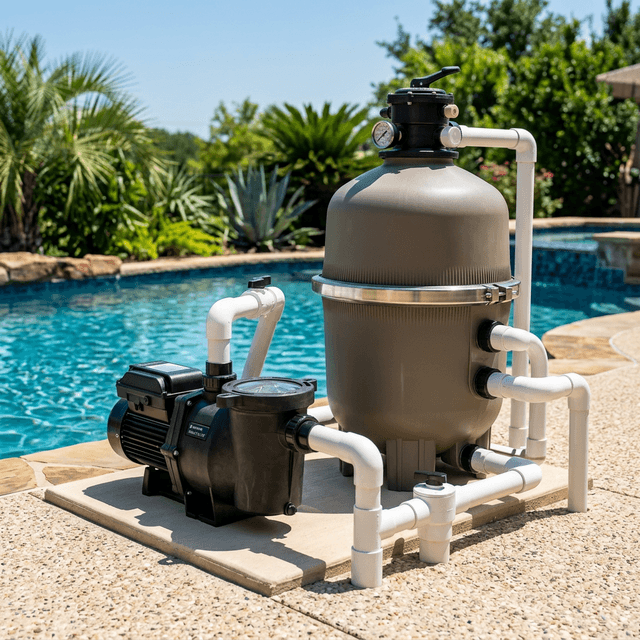
Your pump is the heart of your pool. It runs 6-12 hours a day, 365 days a year. A bad pump choice costs you every single day in energy bills. A good one pays for itself.
The Single Most Important Upgrade You Can Make
Get a variable speed pump.
We know. You've heard this. But it's true, and the math is so dramatic that we need to spell it out:
A typical single-speed pump costs $60-120/month to run in DFW. A variable speed pump doing the same filtration work costs $15-35/month. That's $500-1,000 saved per year. The pump pays for itself in 12-18 months.
We're not talking about a marginal improvement. We're talking about cutting your pool energy bill by 60-80%.
Our Pump Recommendations (Honest)
Budget pick: Pentair SuperFlo VS (~$800-1,000) Does exactly what you need. Reliable. Quiet. Not fancy, but it'll run for 7-10 years without drama. If you're replacing a single-speed and want to save money right away, this is the one.
Best overall: Pentair IntelliFlo VSF (~$1,200-1,600) The "VSF" stands for variable speed AND flow. It automatically adjusts not just speed but flow rate based on what your system needs. If you have a heater, water features, or a complex plumbing setup, this pump handles it all. Smart, efficient, reliable.
Also good: Hayward VS Omni (~$1,100-1,400) Hayward's answer to the IntelliFlo. Slightly different interface, similar performance. If your other equipment is Hayward, this integrates well.
Skip: Any single-speed pump unless you're on a truly tight budget and plan to upgrade within 2 years. The energy waste isn't worth the savings on the pump itself.
What Size Pump Do You Need?
This is where pool stores make money selling you the wrong thing. Bigger is NOT better with pumps.
An oversized pump doesn't clean your pool faster. It:
- Wastes energy (bigger motor = bigger electric bill)
- Creates too much flow, damaging plumbing and equipment
- Causes cavitation (the pump starves for water and damages itself)
- Wears out your filter faster
The right size depends on your plumbing. A 2-inch plumbing system can only move so much water regardless of how powerful the pump is. Most residential DFW pools with 2-inch plumbing need a 1.5-2 HP pump (or its variable speed equivalent).
More details: Pool Pump Sizing Guide.
Filters: Keep It Simple
Pool owners overthink filters. Here's the actual breakdown:
Cartridge Filters: Our Recommendation for Most DFW Pools
Why cartridge: Easiest to maintain, no backwash waste, excellent filtration (10-15 microns). You pull out the cartridge, spray it with a hose, put it back. Done.
Our pick: Pentair Clean & Clear Plus 420 (~$500-700) 420 sq ft of filtration area handles pools up to 40,000 gallons. Oversizing the filter (not the pump!) is actually smart — it means less frequent cleaning and better filtration.
Replacement cartridges: $80-120 each, needed every 2-4 years depending on maintenance. Available at our store.
Sand Filters: Fine, But Aging Technology
Sand filters work. They've worked for decades. But they filter to only 20-40 microns (cartridge does 10-15), they waste water during backwashing, and the sand needs replacing every 5-7 years ($200-400 for the sand change).
If you already have one, keep using it. If you're buying new, go cartridge.
DE Filters: Best Filtration, Most Maintenance
Diatomaceous earth filters clean to 3-5 microns — the best in the industry. But they require DE powder after every backwash, the grids are expensive to replace ($400-800), and they're more work to maintain.
Worth it for crystal-obsessed pool owners. Overkill for most residential pools.
Salt Systems: The Good, the Bad, and the Expensive Replacements
Salt chlorine generators are popular in DFW. We install and maintain them every day. Here's the honest story:
What You're Actually Buying
A salt system converts dissolved salt into chlorine. That's it. Your pool is still a chlorine pool — the chlorine is just made on-site instead of added manually.
The appeal: No buying, storing, or handling chlorine. The system does it automatically. For many people, this convenience is worth the investment.
The cost reality:
- Salt system + installation: $1,500-3,000
- Salt cell replacement (every 3-7 years): $500-1,200
- Salt: $50-100/year
- Cell cleaning: $75-150 if done professionally
Compare that to manually dosing liquid chlorine:
- Chlorine: $300-500/year
- Your time: 10 minutes/week
Over a 10-year period, salt systems usually cost more than manual chlorination when you factor in cell replacements. But many people gladly pay the premium for convenience.
Our Salt System Recommendations
If you want salt: Pentair IntelliChlor IC40 (~$800-1,100 for the cell) Industry standard. Reliable. Good software. Parts are easy to get. If something goes wrong, every pool tech knows how to fix it.
Also good: Hayward AquaRite S3 (~$900-1,200) Strong competitor. Built-in water chemistry monitoring on the newer models.
Avoid: Off-brand salt cells from Amazon. We've seen them fail in 6 months. The cell is the one place you don't want to cheap out.
Robotic Cleaners: Buy One. Seriously.
If you own a pool and don't own a robotic cleaner, you're working too hard.
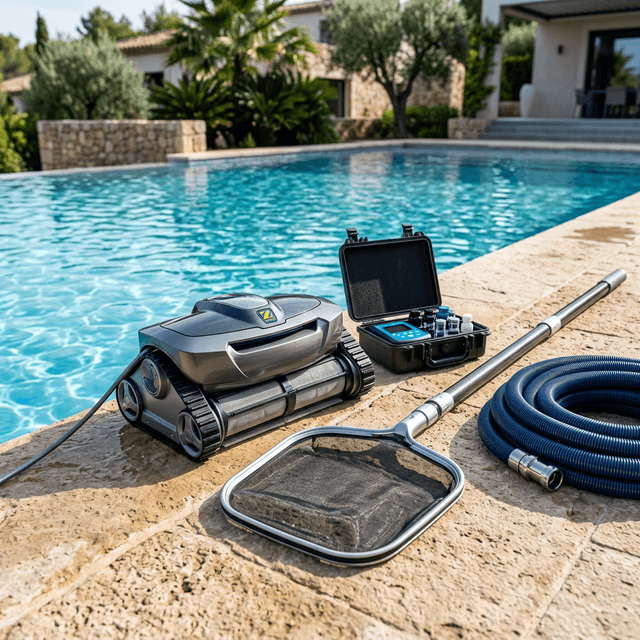
A good robotic cleaner scrubs your pool floor (and often walls) automatically while filtering fine debris through its own internal basket. You drop it in, press start, and come back to a clean pool.
Our Recommendations
Best value: Dolphin Nautilus CC Plus (~$600-800) Does the job. Cleans the floor and lower walls. Easy to use, easy to clean. The "CC" stands for CleverClean — it maps your pool and doesn't just wander randomly.
Best overall: Dolphin Premier (~$1,100-1,500) Multiple brush options, cleans floor, walls, AND the waterline. Multi-layer filtration catches everything from leaves to fine particles. This is the one we tell most of our customers to buy.
Premium: Pentair Prowler 930 (~$1,400-1,800) WiFi-enabled, app-controlled, incredibly thorough. For the tech-obsessed pool owner.
Read our full breakdown: Best Robotic Pool Cleaners for 2026.
Browse our full vacuum and cleaner selection.
Pool Automation: Worth It If You Do It Right
Automation systems (Pentair IntelliCenter, Hayward OmniLogic, Jandy iAqualink) let you control your pump, heater, lights, and water features from your phone. They also enable scheduling, freeze protection, and chemical monitoring.
When Automation Makes Sense
- You have multiple pieces of equipment (pump + heater + salt cell + lights)
- You want remote monitoring (check your pool from work)
- You want freeze protection that actually works (the automation turns on your pump automatically when temps drop)
- You're building or renovating and can install the panel during construction
When It Doesn't Make Sense
- You have a simple setup (pump + filter, no heater or salt cell)
- You're home most of the time and don't mind flipping switches
- Budget is tight — $1,500-3,000 for automation is better spent on a VS pump if you don't have one yet
Full guide: Pool Automation Systems Guide.
What NOT to Buy
Let's save you some money on things that aren't worth it:
Ozone generators for residential pools. The theory is sound (ozone kills stuff), but residential ozone systems produce so little ozone that the real-world benefit is minimal. You still need full chlorine levels. Save the $1,000-2,000.
Mineral sanitizers (Nature2, Frog systems). They supplement chlorine slightly but don't replace it. You still need to maintain normal chlorine levels. The ongoing cartridge cost ($100-200/year) doesn't justify the marginal benefit for most pool owners.
Ultrasonic algae prevention devices. These claim to use sound waves to prevent algae. Peer-reviewed evidence is essentially nonexistent for pool-sized applications. Save your money and maintain your chlorine properly.
"Smart" chemical dispensers that cost $500+. A $10 floating chlorine dispenser does the same job. If you want automated chemical dosing, get a proper salt system or a peristaltic pump system — not a gadget.
The Buying Strategy That Saves the Most Money
Here's our actual advice for pool equipment purchases:
-
Spend big on the pump. It runs every day. Energy savings compound every month. A variable speed pump is the best ROI of any pool equipment purchase.
-
Oversize the filter, not the pump. A bigger filter means less frequent cleaning and better water quality. A bigger pump means higher energy bills and stressed plumbing.
-
Buy the best robotic cleaner you can afford. The time savings alone are worth it. The water quality improvement is a bonus.
-
Wait on automation until you need it. If you're adding a heater, salt system, or doing a renovation — that's the time to add a control panel. Don't retrofit it onto a simple setup.
-
Don't cheap out on the salt cell. Off-brand cells cost the same to install but last half as long. The brand-name cell at $800 that lasts 5 years is cheaper than the $400 cell that lasts 18 months.
-
Buy chemicals locally. Chlorine loses potency sitting in a hot delivery truck for days. Buy from a local pool supply store where turnover is high and product is fresh. Or order online for things that don't degrade (test kits, tools, accessories).
Need Help Deciding?
If you're staring at your equipment pad wondering what to replace first, or building a new pool and trying to spec the right equipment — we help with this every day.
Come by our Northlake store and talk to us. We'll look at your pool's specs, your current equipment, and your budget and give you a straight answer about what makes sense.
We sell equipment. We also install and service it. But more than anything, we want you to buy the right thing the first time — because we're the ones who have to fix it when the wrong equipment fails.