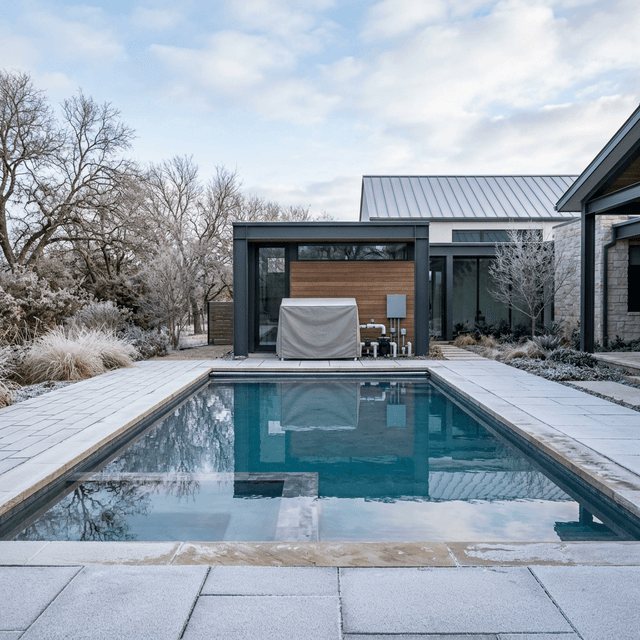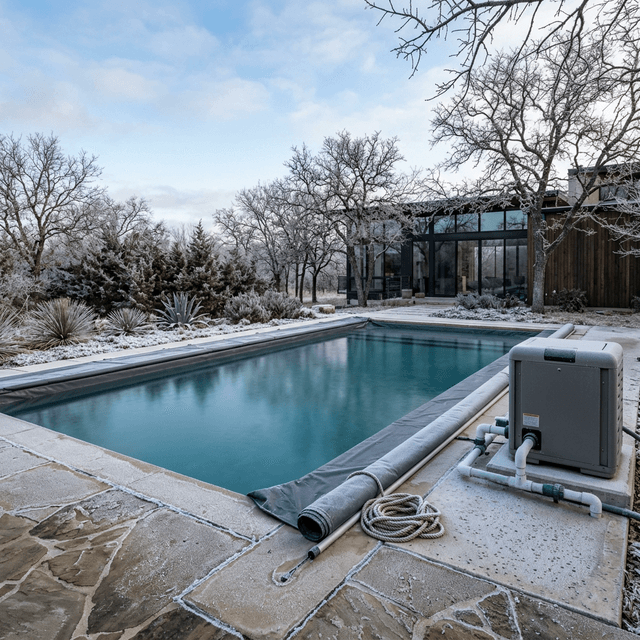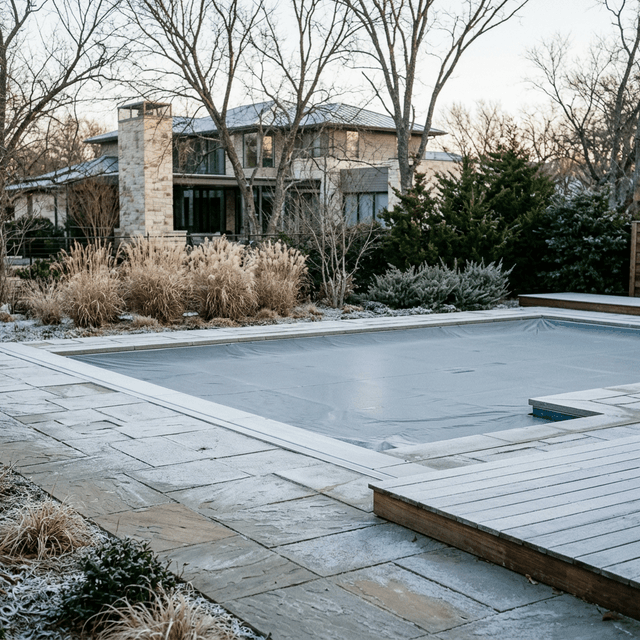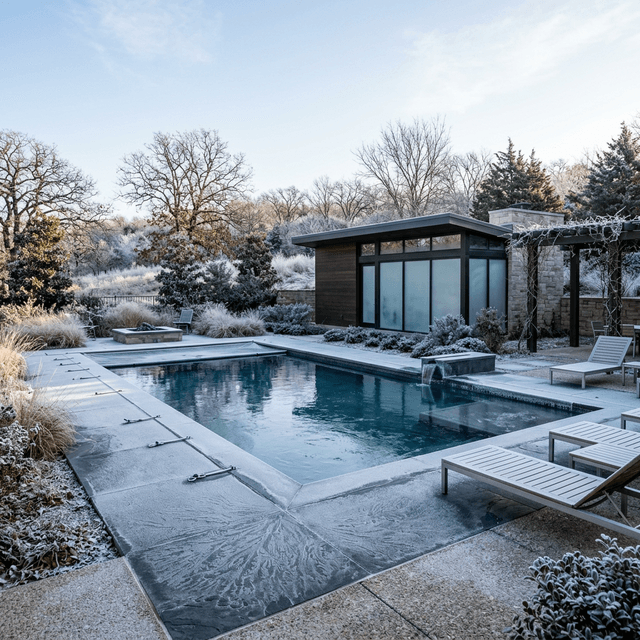
Winter comes, the weather cools, and many DFW pool owners think it's time to stop caring for their pool. After all, nobody's swimming in it, and the cold water doesn't need much maintenance, right?
Wrong. These myths about off-season pool care have cost homeowners thousands in unnecessary damage, equipment failure, and spring opening disasters. Let's debunk six persistent beliefs that lead to expensive problems.
Myth 1: Pumps Don't Need to Run During Winter
The myth: Cold water doesn't circulate algae or other problems, so why run the pump?
The reality: Stagnant water is a maintenance nightmare.
When your pump doesn't run:
- Water becomes stagnant and develops algae, even in winter (yes, algae grows slowly in cold water, but it still grows)
- Chemicals don't circulate properly, creating chemical dead zones
- pH and chlorine become unbalanced in different parts of the pool
- Ice can form in plumbing and equipment, causing freeze damage
- Calcium and other minerals settle and scale on the pool surface
- Bacteria and pathogens multiply unchecked
What you should do: Run your pump at least 6-8 hours daily during winter. You don't need full-speed circulation, but you do need movement. Many experienced pool owners run circulation on a timer: 6-8 hours during the day when it's warmer, then off at night. This keeps water moving without wasting energy.
Running your pump through winter isn't optional—it's essential maintenance that prevents larger problems.
Myth 2: Chemicals Don't Matter Once It Gets Cold
The myth: Cold water is so stable that you can stop testing and treating chemicals.
The reality: Water chemistry matters year-round, and neglecting it in winter guarantees problems in spring.
Here's what happens when you stop maintaining chemistry:
- Chlorine naturally decays over time, even in cold water. Without supplementation, levels drop to zero.
- Unclorinated water becomes a bacteria factory
- pH drifts out of balance without alkalinity adjustments
- Algae spores germinate and establish colonies
- Mineral deposits build up on surfaces (especially with hard North Texas water)
- By spring, your pool is green or cloudy and requires draining or extensive treatment
What you should do: Test water chemistry at least once weekly during winter. Maintain:
- Chlorine at 1-2 ppm (much lower than summer, but not zero)
- pH between 7.2-7.6
- Alkalinity 80-120 ppm
- Calcium hardness monitored
Yes, adjustments are less frequent in winter than summer, but zero maintenance is a recipe for disaster. Winter maintenance takes 30 minutes per week, preventing problems that require $500+ to fix in spring.
Myth 3: Algae Can't Grow in Winter
The myth: Algae only grows in warm water, so winter protection is unnecessary.
The reality: Algae grows in cold water too—just more slowly.
Many DFW homeowners are shocked to open their pool in spring and find it completely green, even though they haven't seen swimmers or warm sun in months. How did that happen?
Algae thrives in:
- Warm OR cold water (just more slowly in cold)
- High pH conditions (which develop when chemistry isn't maintained)
- Low chlorine (which inevitably happens without maintenance)
- Stagnant water (which develops without circulation)
Winter conditions actually create algae spores' dream environment: cold, stagnant, unchlorinated water where they can slowly germinate and establish colonies undisturbed.
What you should do: Maintain minimum chlorine levels and keep the pump running through winter. This prevents algae from establishing a foothold that you'll have to wage war against come spring.
Myth 4: Leaves and Debris Won't Hurt; You'll Clean Everything in Spring
The myth: Accumulated leaves and debris are just a cosmetic problem you'll handle during spring opening.
The reality: Organic debris causes multiple problems beyond just needing vacuuming.
What actually happens:
- Leaves decompose, releasing phosphates that feed future algae blooms
- Dead organic matter consumes chlorine trying to disinfect it
- Decomposing debris creates acidic water that corrodes metal equipment
- Heavy debris loads overwhelm filters, reducing circulation
- Organic buildup on the pool surface causes staining that's hard to remove
- Decaying matter creates an oxygen-depleted environment that encourages pathogens
You won't "clean it all in spring" as easily as you think. Heavy debris loads require extended brushing, backwashing, and chemical treatment to restore clarity.
What you should do: Remove leaves and debris regularly throughout winter, at least monthly. Especially after storms, spend 15 minutes clearing leaves. This prevents accumulation and the problems it creates.
Myth 5: Filters Don't Need Cleaning Until Spring
The myth: Since the pump rarely runs and the water isn't that dirty, filters stay clean over winter.
The reality: Filters get clogged and require regular maintenance regardless of season.
Even with lower circulation, your filter accumulates:
- Algae spores (which don't require warm water to germinate)
- Mineral deposits from hard water
- Organic material from decomposing debris
- Dust and atmospheric particles
- Corrosion products and scale
A clogged filter:
- Restricts water circulation even when the pump runs
- Reduces chemical distribution throughout the pool
- Forces the pump to work harder, using more energy
- Can fail completely when you try to resume normal operation in spring
- Needs expensive replacement if damage occurs
What you should do: Check filter pressure monthly during winter. If it's 8-10 psi higher than normal starting pressure:
- Backwash your sand or DE filter
- Clean your cartridge filter with a filter cleaner
- Monitor pressure weekly until it stabilizes
Preventive filter maintenance during winter ensures your system is ready to run properly when you need it.
Myth 6: A Pool Cover Eliminates All Chemical Maintenance Needs
The myth: A cover protects the water so well that you don't need to maintain chemistry.
The reality: Covers slow down problems but don't eliminate them.
A cover does help by:
- Reducing debris accumulation
- Slowing algae growth slightly
- Reducing chlorine loss to the sun
But covers don't:
- Prevent all debris entry (wind, debris still finds ways under covers)
- Stop chlorine decay completely (it still happens, just slower)
- Replace circulation (water under a cover is stagnant)
- Prevent all algae growth (it still grows, just more slowly)
- Eliminate the need for testing and balancing chemistry
Worse, a cover can hide problems. You won't see developing algae blooms or cloudy water until you remove the cover, potentially meaning spring opening is far more complicated than if you'd maintained the pool visibly.
What you should do: If you use a cover, still maintain chemistry underneath. Test water weekly, add chlorine as needed, and keep circulation running at least part-time. A cover is supplementary protection, not a replacement for maintenance.
The Cost of These Myths
Let's put actual numbers on these mistakes:
- Spring algae bloom requiring professional treatment: $300-500
- Green water requiring extended shock and treatment: $200-400
- Clogged filter requiring replacement: $400-1,000
- Filter damage from poor circulation: $500-1,500
- Scale damage requiring acid washing: $800-1,500
- Equipment failure from freeze damage and neglect: $1,500-5,000+
Skipping winter maintenance that costs 30 minutes per week and maybe $50-100 in chemicals can easily result in $2,000+ in spring opening costs and repairs.
The Right Off-Season Approach
Winter pool care in North Texas is straightforward. Stock up on winter chemicals — chlorine, pH adjusters, and test kits — at our Northlake pool supply store or online shop so you always have what you need on hand.
- Run your pump 6-8 hours daily
- Test chemistry weekly
- Maintain minimum chlorine (1-2 ppm)
- Keep pH and alkalinity balanced
- Remove leaves and debris monthly
- Check filter pressure and clean as needed
- Don't operate heaters below 70°F
- Prepare for and manage freeze events
This routine takes 1-2 hours per week and costs $20-30 in chemicals monthly. It's the difference between opening to a clear, balanced pool in spring versus facing a cloudy, algae-filled disaster. For a complete walkthrough, see our guide on pool closing and winterization in Texas. If you have a saltwater pool, also check out our tips on cold weather salt cell protection to avoid costly equipment damage.
Professional Help for Winter Maintenance
If you don't want to handle winter maintenance yourself, many DFW pool companies offer winter service packages. A professional visiting monthly to test chemistry, add chemicals, clean filters, and remove debris might cost $300-500 for the entire winter season.
That's still far cheaper than the $2,000+ cost of problems that develop from neglect.
Want professional guidance on winter pool maintenance or need help setting up a winter care routine? Pick up everything you need for winter care at our Northlake store or shop online. You can also call us at (469) 455-1054 or contact Simplified Pools for personalized winter maintenance recommendations and service options.